Is Temp Mail a Paid Service?
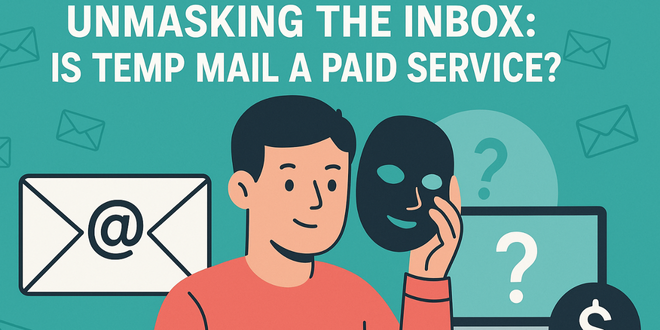
The internet is a vast landscape of opportunities, but also a breeding ground for spam, unwanted marketing emails, and privacy intrusions. In this environment, the Temporary Email Address, often shortened to "Temp Mail," has emerged as a crucial tool for digital defense. These services offer disposable, anonymous inboxes for one-time sign-ups, verifications, and suspicious website interactions. A common question for newcomers is: Is Temp Mail a paid service, or can I use it for free?
The short answer is: It’s both. The core functionality of almost every reputable temp mail service is offered completely free of charge. However, a growing trend sees providers offering premium, paid subscriptions to unlock advanced features, catering to power users, businesses, or those demanding superior privacy and convenience.
This comprehensive guide will delve into the economics of temporary email services, outlining what you get for free, what you pay for, and how to decide if a premium temp mail subscription is worth the investment.
The Fundamentals: Free Temp Mail – A User’s Digital Shield
The very foundation of the temporary email concept is built on accessibility and simplicity, which is why the basic service is overwhelmingly free.
The Value Proposition of Free Services
The main goal of a free temp mail service is to provide a user with a disposable, functional email address instantly. This core offering delivers immense value by acting as a digital shield between a user's primary, personal email address and the risk of spam.
- Instant Access and Generation: Users can typically generate a random, working email address with a single click, without the need for registration, passwords, or personal information.
- Spam Prevention: The primary and most popular use is to sign up for services, forums, or download content without exposing a personal address to potential spammers and marketers.
- Anonymity: Since no registration is required, the user remains almost entirely anonymous. The temporary nature of the inbox ensures that the user cannot be tracked or linked to the disposable address for long.
- Message Reception: The free tier allows for the immediate, automatic display of incoming emails, typically used for account verification links or confirmation codes.
Key Limitations of the Free Tier
While highly functional for basic needs, the free version of most temp mail services comes with inherent limitations that drive the need for premium alternatives. These limitations are often necessary for the service provider to maintain the free infrastructure while nudging certain users toward a paid plan.
- Short Lifespan: Emails and the inbox itself are often programmed to self-destruct after a very short time, ranging from 10 minutes to a few hours. This is adequate for a verification code but useless for anything requiring future access.
- Limited Storage and Message History: Free inboxes rarely save emails for long. Once the time limit is up, the emails are permanently deleted and cannot be recovered.
- Public Domain List: The email address generated often uses a domain shared by thousands of other users (e.g.,
@tempmail.org). This can lead to these domains being blocked by major websites (like Netflix or certain social media platforms) that actively filter out known disposable email providers. - Advertisements: To support the free infrastructure, most free temp mail websites display visible advertisements, which can sometimes be intrusive or slow down the user experience.
- No Customization: Users cannot typically choose the name portion of the email address; it is randomly generated (e.g.,
s9f3j2h@domain.com).
The Premium Evolution: What You Pay For
The transition from a simple, free utility to a subscription service is driven by the demand for convenience, security, and extended functionality. Premium plans transform the temporary inbox from a one-time tool into a robust, semi-permanent email management utility.
Key Features Exclusive to Paid Temp Mail Plans
Premium subscriptions are designed to eliminate the limitations of the free tier, offering a suite of enhanced features for a monthly or annual fee.
Extended Email and Inbox Lifespan
This is arguably the most significant upgrade. Paid users can often set their inboxes to last for days, weeks, or even a month. Some services offer a "permanent" or "long-term" storage option, where emails are saved indefinitely until the user manually deletes them. This is essential for:
- Trial Monitoring: Signing up for a 7-day trial and keeping the inbox active to monitor for future renewal notices.
- Long-Term Verifications: Keeping access to an account that might require occasional password resets or security checks.
Exclusive, Private Domains and Customization
Premium accounts provide access to an exclusive list of "premium domains" that are not shared on the free tier. This makes the email address much less likely to be recognized and blocked by large service providers. Furthermore, users gain full control over the address prefix, allowing them to choose a memorable, personal, or professional-looking address (e.g., myprojectname@premiumdomain.com).
Multiple Mailboxes (Aliasing)
Power users, developers, and testers often need more than one disposable address simultaneously. Premium plans typically allow users to create and manage multiple, concurrent mailboxes from a single dashboard. This is invaluable for:
- A/B Testing: Signing up for different services with different email accounts to compare user experiences.
- Role-Based Testing: Creating separate inboxes for "admin," "user," and "guest" profiles in an application.
Enhanced Security and Privacy
While all temp mail is private, premium versions often bolster security with features like:
- VPN Integration: Some providers bundle a VPN service or offer a dedicated IP address for the email service.
- Ad-Free Experience: The removal of all advertisements provides a cleaner interface and slightly faster loading times, while also eliminating the privacy concerns associated with third-party ad trackers.
Email Forwarding and API Access
For advanced users, premium plans may include:
- Email Forwarding: Automatically redirecting incoming temporary emails to a user's permanent, private inbox (a huge convenience).
- API Access: Developers can integrate the temporary email functionality into their own applications or scripts for automated testing and registration processes.
Who Needs to Pay for Temp Mail?
Given the excellent utility of the free service, the question becomes: Who is the target audience for a paid temp mail subscription? The premium model is not designed for the casual, one-time user but for specific, high-frequency needs.
The Power User and Digital Enthusiast
These users frequently test new software, sign up for dozens of free trials, or engage in beta testing. They need reliable, unblocked domains and the ability to manage multiple credentials without cluttering their main inbox. The convenience of long-term storage and an ad-free interface justifies the cost.
Developers and QA Professionals
Software developers and Quality Assurance (QA) testers rely heavily on temporary email for automated testing. They need to create and verify hundreds of test accounts quickly. API access is often a non-negotiable requirement for this work, allowing them to programmatically generate and check inboxes, a feature almost universally restricted to the premium tier.
Business and Marketing Professionals
Marketers may use disposable emails for competitive research, monitoring competitor newsletters, or anonymously testing their own sign-up flows across different jurisdictions. A premium plan ensures they have reliable, unique addresses that are not immediately blocked as “disposable.”
Users Seeking Maximum Privacy
While free temp mail is anonymous, a paid plan can offer a layer of separation. The dedicated, less-used domains associated with premium accounts provide a stronger guarantee of anonymity against sites that aggressively track and block known public domains.